
Success stories
What Our Clients Are Saying
From Stuck to Streamlined
How a Regional Media Company Future-Proofed Their Phones with Microsoft Teams
The IT department at a regional media company was in a tight spot. With over 300 users, their aging Avaya phone system had become more of a liability than an asset. Their vendor had already warned them: support was minimal, parts were scarce, and any new issue could mean serious downtime. The team had tried everything they could think of—calls to the vendor, troubleshooting with other providers, even repeated restarts of the system itself. Each attempt only led to more outages and more frustration.

That’s when we stepped in.
We began by setting up temporary call forwarding using Microsoft Teams Operator Connect, ensuring that the company’s main lines stayed active while we built a longer-term solution. From there, we gradually transitioned users who had direct Avaya lines into Microsoft Teams—no desk phones, no disruptions, just a smooth move to a platform their team was already using every day.
Once the transition was complete, the difference was immediate. Employees were now making and receiving calls right from their Microsoft Teams client—no extra training needed. More importantly, they weren’t tied to their desks anymore. Calls followed them whether they were in the office or remote, and new features like call routing, voicemail-to-email, and mobile accessibility opened the door to a completely new way of working.
And the IT team? They looked like heroes. Not only did the shift cut their telephony bills by nearly 50%, but the upfront investment was a fraction of what a legacy system overhaul would have cost—especially important given how sudden and untimely the system failure had been. There was no hardware to install, no contractors to coordinate, and no interruptions to manage.
What started as a response to system failure became a full digital transformation. Now, instead of managing outages, the company is managing growth—with a communications system built for how work actually happens today.
Your Team Is Already in Teams
Let's Move Your Phone Calls There Too
Book a free 30-minute consultation. We'll look at your current setup, show you what the switch looks like end-to-end, and map out a realistic cost range for a business your size before you make any decisions. No pressure. No jargon. No commitment until you're ready.
Free Resource
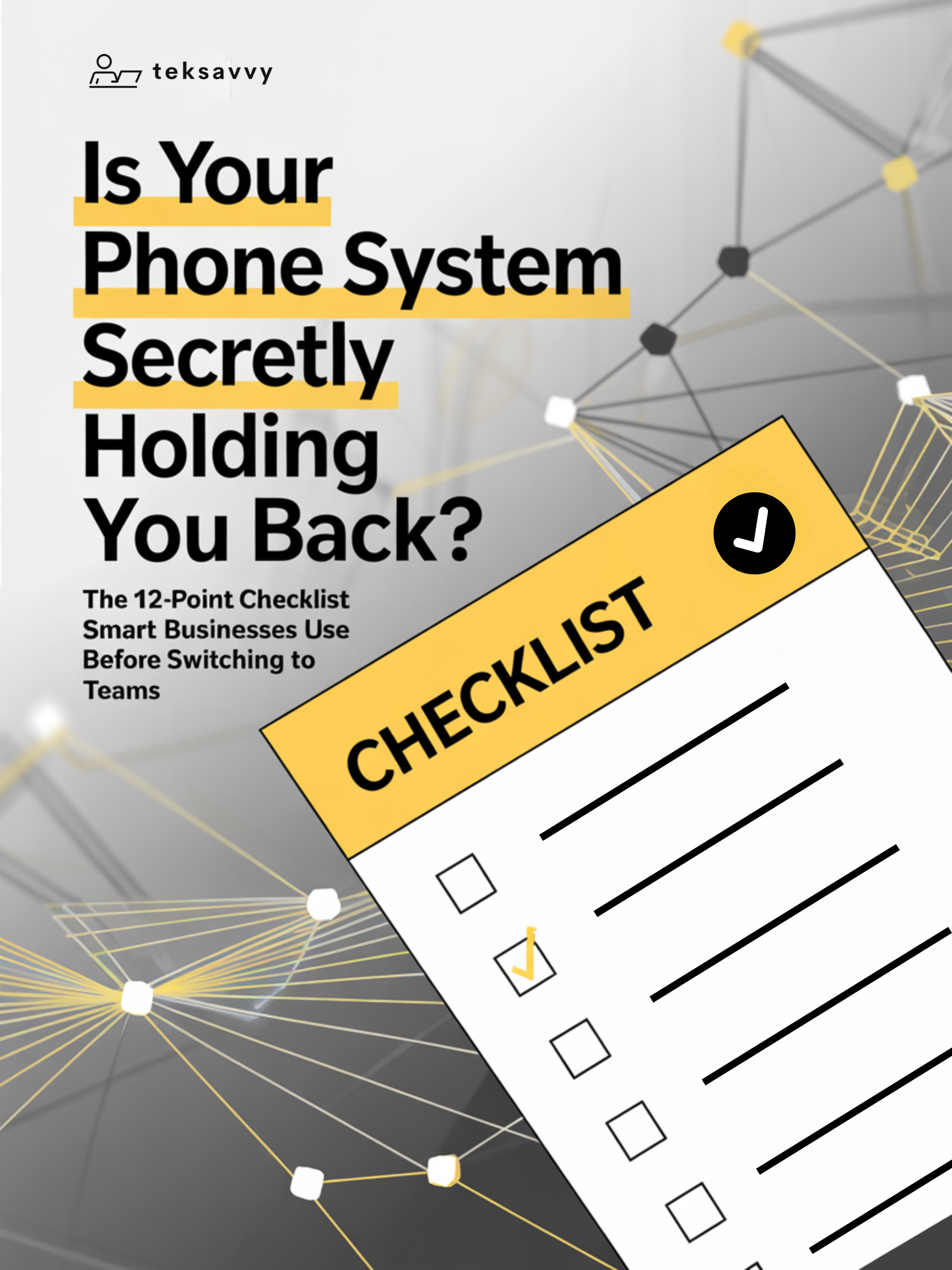
Not Sure If You're Ready to Switch? Start Here.
This 12-point checklist helps you spot the hidden signs your current phone system is costing you more than you realize — before you talk to anyone.
The warning signs your system is already falling behind
How to tell if you're overpaying right now
What hybrid and remote teams need that legacy systems can't deliver
The one question to ask before any migration conversation


Copyright 2025 | Teksavvy, Inc. | Terms & Conditions